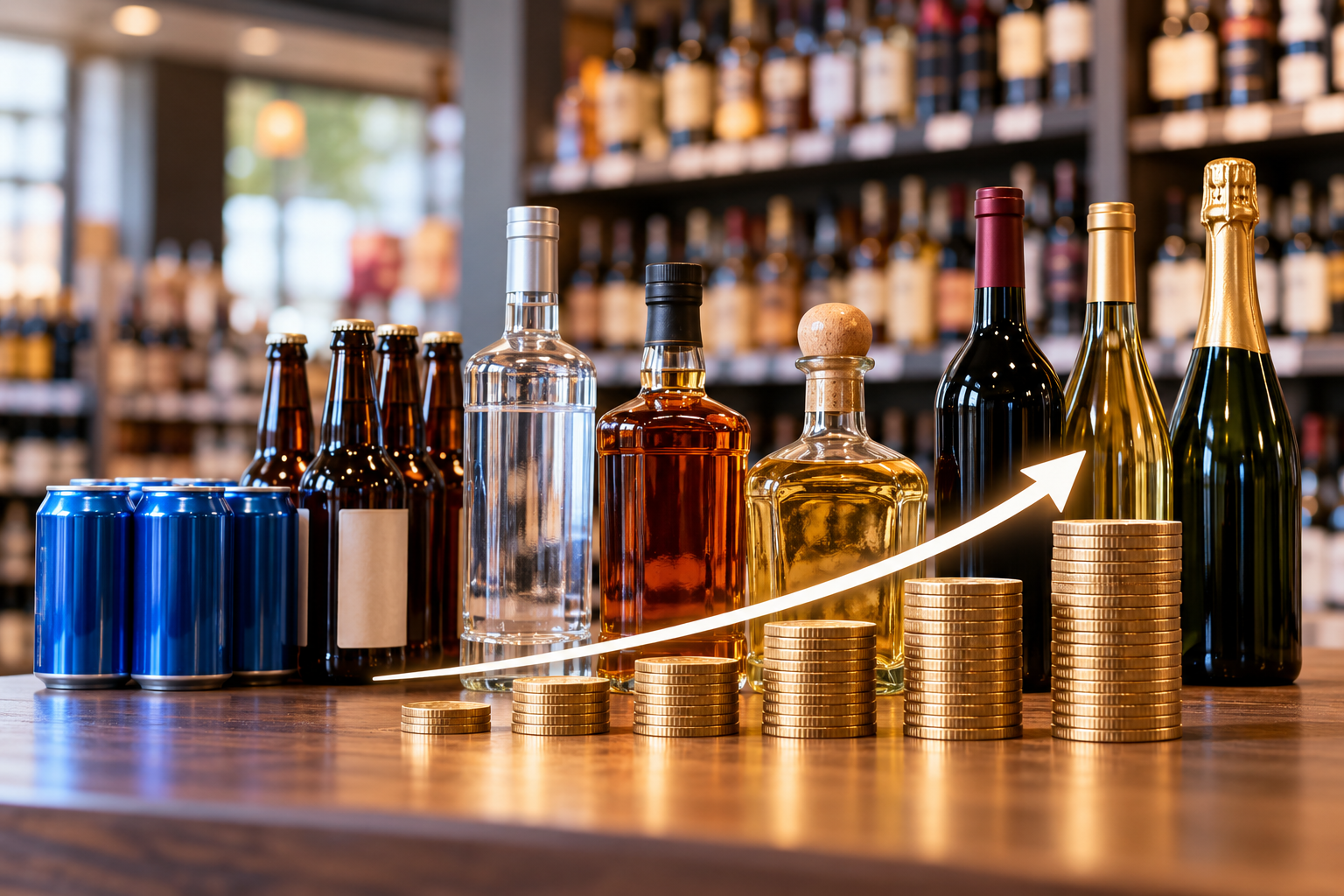
Alcohol Retail Trends in 2026 Liquor Store Owners Should Take Advantage of
As the alcohol retail industry moves into 2026, success will hinge less on selling more volume and more on aligning with evolving consumer behavior. Shifts in health priorities, premiumization, cocktail culture, and generational preferences are reshaping how shoppers browse shelves and make purchasing decisions.
Here are the most important Alcohol Retail Trends in 2026 that liquor store owners should be capitalizing on
1. No-Alcohol and Low-ABV Drinks Are Now Core Categories
The “sober curious” movement has evolved into a permanent buying behavior. Consumers aren’t abandoning alcohol entirely — they’re rotating between full-strength, low-ABV, and non-alcoholic options depending on occasion.
According to IWSR, the no- and low-alcohol category is expected to continue growing at a steady pace through the end of the decade, especially among millennials and Gen Z:
https://www.theiwsr.com/insight/no-and-low-alcohol-strategic-state-of-play/
Non-alcoholic beer in particular has seen rapid adoption in the U.S. and Europe, driven by improvements in flavor and brand credibility:
https://www.reuters.com/world/europe/non-alcoholic-beer-sales-grow-europe-2024-01-10/
What this means for retailers:
Dedicated shelf space, clear signage, and variety matter. Customers shopping no- and low-alcohol want options, not a single SKU tucked away.
2. Tequila and Agave Spirits Remain Growth Leaders
While overall spirits growth has slowed, tequila and mezcal continue to outperform most categories. Premium tequila, additive-free expressions, and cocktail-friendly bottles are driving sustained demand.
The Distilled Spirits Council reports tequila as one of the fastest-growing spirits categories in the U.S. by revenue:
https://www.distilledspirits.org/newsroom/report-american-spirits-continue-to-gain-market-share/
Margaritas also remain the most popular cocktail in the U.S., reinforcing steady demand for agave spirits at retail:
https://vinepair.com/articles/most-popular-cocktails-america-2024/
What this means for retailers:
Stock across price tiers — value, premium, and super-premium — and merchandise tequila with cocktail mixers and glassware to increase basket size.
3. Wine Sales Are Stabilizing Around Specific Styles
Wine consumption has declined in volume over the past few years, but demand is stabilizing in categories that align with lighter, social drinking occasions.
Research shows sparkling wine, rosé, and lighter white varietals are outperforming heavier styles among younger consumers:
https://www.foodandwine.com/gen-z-wine-trends-2025-11868702
Industry analysts also note that wine remains a key category for at-home consumption and casual entertaining:
https://www.the-buyer.net/opinion/rob-mcmillan-us-wine-sales-decline/
What this means for retailers:
Refine selection rather than expand it. Focus on high-velocity varietals and styles that match current consumption habits instead of broad, unfocused wine walls.
4. Premiumization Is About Value, Not Just Price
Consumers are still willing to spend more — but only when they understand why a product costs more. Authenticity, provenance, aging, and craftsmanship are key drivers.
According to IWSR, premium-plus spirits account for a disproportionate share of revenue growth even when overall volumes decline:
https://www.theiwsr.com/insight/why-premiumisation-is-evolving-not-ending/
Small-batch whiskey, additive-free tequila, and imported aperitifs are particularly strong performers.
What this means for retailers:
Education sells premium. Shelf talkers, tasting notes, and staff recommendations help justify higher price points and reduce customer hesitation.
5. Ready-to-Drink (RTD) Beverages Continue to Evolve
One of the continuing Alcohol Retail Trends in 2026, that really exploded in 2025, is the sale of RTDs. RTDs are no longer just malt-based canned cocktails. Spirit-based RTDs, wine-based spritzes, and better-for-you formulations are expanding the category.
IWSR projects continued RTD growth globally through 2027, with spirit-based RTDs gaining share in the U.S.:
https://www.theiwsr.com/insight/rtds-to-continue-global-growth/
Consumers increasingly view RTDs as an occasion-based purchase rather than a replacement for spirits.
What this means for retailers:
Merchandise RTDs by use case — poolside, events, convenience — and rotate SKUs seasonally to avoid dead inventory.
6. Smaller Formats and Moderation-Friendly Packaging Are Gaining Traction
Half-bottles, canned wine, and 375 ml spirits are becoming more popular as consumers moderate consumption and seek variety.
According to NielsenIQ, shoppers are increasingly favoring smaller pack sizes for flexibility and reduced waste:
https://nielseniq.com/global/en/insights/analysis/2024/what-moderation-means-for-alcohol-retail/
What this means for retailers:
Smaller formats encourage trial, gifting, and weekday purchases — especially in premium categories.
7. Cocktail Culture Is Driving At-Home Experimentation
Social media, streaming content, and home entertaining have fueled interest in cocktail making. Shoppers are increasingly buying ingredients, not just bottles.
VinePair reports rising interest in classic cocktails, aperitifs, and low-ABV mixed drinks:
https://vinepair.com/articles/cocktail-trends-2025/
What this means for retailers:
Cross-merchandise spirits with bitters, vermouth, syrups, and garnishes. Recipe cards and seasonal cocktail suggestions drive incremental sales.
8. Transparency and Trust Influence Purchase Decisions
Modern alcohol consumers care about what’s in the bottle — ingredients, sourcing, additives, and sustainability practices matter.
Research shows transparency increases brand trust and loyalty, especially among younger buyers:
https://www.mintel.com/insights/food-and-drink/alcohol-transparency-and-trust/
What this means for retailers:
Highlight brands with clean labeling, ethical sourcing, or sustainability certifications to align with consumer values.
Final Takeaway
The opportunity in 2026 isn’t about chasing every trend — it’s about curating smarter.
Liquor stores that win will:
- Focus on high-velocity, trend-aligned categories
- Educate customers instead of overwhelming them
- Merchandise by occasion, not just category
- Treat premium and moderation as complementary, not competing
Retailers who adapt thoughtfully to these shifts will be better positioned to grow revenue even in a slower, more competitive market.