POS Features for Liquor Stores: What Should a Liquor Store POS System Have?
Choosing the right Liquor Store POS system can have a major impact on how efficiently a liquor store operates. The best POS features for liquor stores go far beyond simply ringing up customers and accepting payments. A modern liquor store POS should help owners manage inventory, track sales, process distributor invoices, monitor employees, update pricing, and make better business decisions.
Running a liquor store is very different from operating a typical retail business. Liquor store owners may manage thousands of SKUs across beer, wine, spirits, mixers, and other categories while dealing with frequent distributor deliveries, age-restricted products, changing costs, case and bottle pricing, and busy checkout periods.
That’s why choosing a POS built around the needs of beverage retailers matters.
If you’re evaluating a new system, here are some of the most important POS features for liquor stores to consider—and how Bevly can help simplify your operation.
1. Liquor Store Inventory Management
Inventory management should be one of the most important POS features for any liquor store.
With thousands of products moving through a store, manually keeping accurate inventory counts can quickly become overwhelming. Every sale, delivery, return, damaged product, and inventory adjustment can affect your numbers.
A good liquor store POS should make it easy to:
- Track inventory as products are sold
- Monitor current stock levels
- Identify products that are running low
- See which products are selling quickly
- Identify slow-moving inventory
- Update inventory when merchandise arrives
- Maintain accurate product information
Better inventory data can help owners make smarter purchasing decisions, avoid unnecessary stock-outs, and reduce the amount of money tied up in products that aren’t selling.
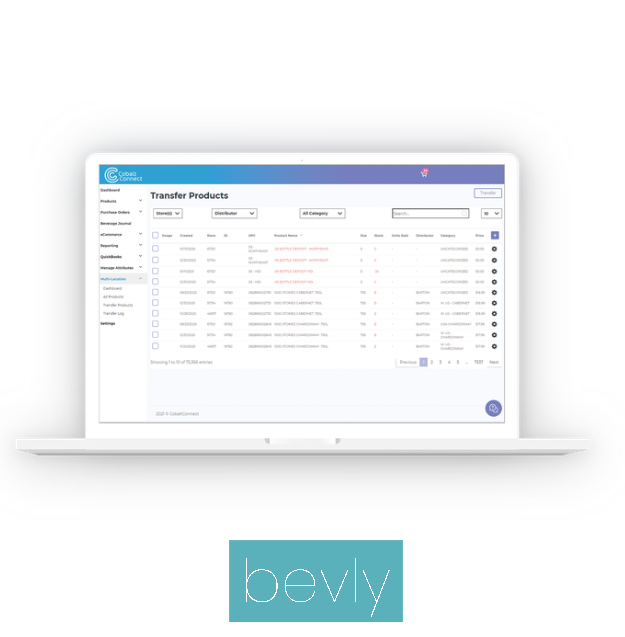
Bevly is designed specifically with beverage retailers in mind, bringing important sales and inventory information together in one platform.
Schedule a Bevly demo to see how it works.
2. Fast and Simple Checkout
Speed and ease of use are essential POS features for liquor stores, especially during busy periods.
Friday and Saturday evenings, holidays, major sporting events, and other high-volume periods can create long lines. Customers don’t want to wait while employees struggle with a complicated checkout system.
A liquor store POS should make transactions fast and intuitive so employees can learn the system quickly and serve customers efficiently.
The fewer unnecessary steps employees have to complete, the smoother the checkout experience can be.
3. Barcode Scanning and Product Lookup
Liquor stores can carry thousands of different products, making efficient barcode scanning and product lookup essential.
Employees should be able to scan products quickly while also having an easy way to find an item when a barcode doesn’t scan correctly.
Strong product management capabilities can also reduce the amount of manual work required to maintain a large catalog of beer, wine, spirits, and other products.
4. Fintech Invoice Integration
Distributor invoice management is one area where liquor store owners can potentially save a significant amount of administrative time.
Traditional invoice processing can require owners or employees to review products, quantities, costs, and other information before manually updating the POS and inventory.
Bevly integrates with Fintech to help streamline this process.
Liquor stores using Bevly can receive their Fintech invoices through their Bevly profile and use invoice information to update inventory and product data.
For stores already working with Fintech, this means invoice data can become much more useful for managing everyday operations rather than simply facilitating distributor payments.
For liquor store owners comparing POS features for liquor stores, distributor invoice integration is an important capability to consider because of the potential time savings involved.
See Bevly’s liquor store POS in action by scheduling a demo.
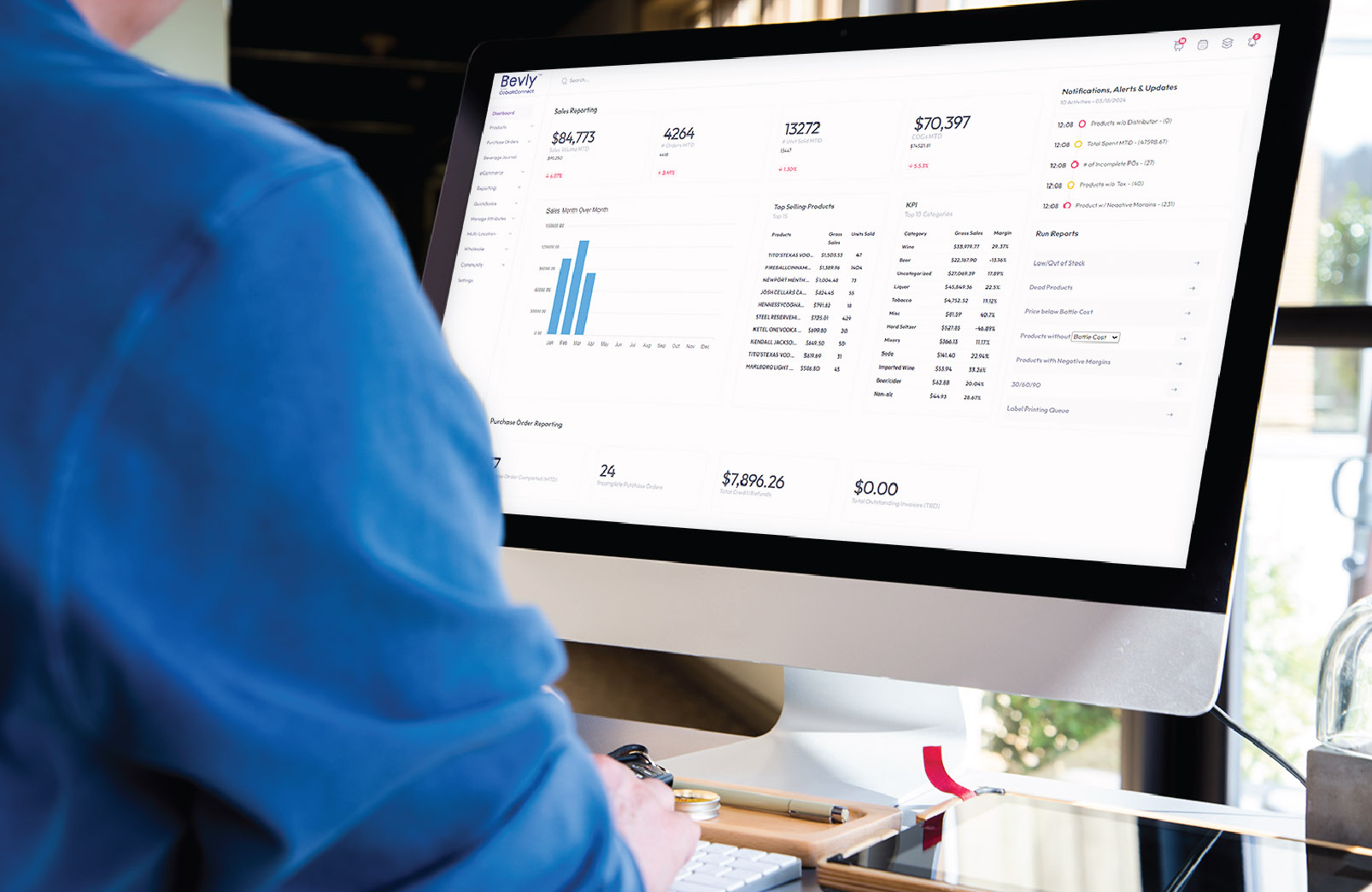
5. Detailed Sales Reporting
You can’t improve what you can’t measure.
A modern liquor store POS should provide owners with easy access to useful sales information without requiring hours of manual spreadsheet work.
Your system should help answer questions such as:
- What were today’s sales?
- Which products are selling the most?
- Which categories generate the most revenue?
- What are the busiest days and times?
- Which products aren’t selling?
- How are sales changing over time?
Good reporting helps owners make decisions based on actual store data rather than intuition alone.
When comparing POS features for liquor stores, look closely at the quality and accessibility of the reporting tools.
6. Employee Management and Accountability
A Liquor Store POS isn’t just a checkout tool. It can also play an important role in employee management and accountability.
Depending on your store’s needs, useful employee-management capabilities can include individual logins, permissions, transaction histories, void tracking, discounts, and other register activity.
Better visibility into what’s happening at the register can help owners maintain accountability and identify unusual activity more quickly.
7. Age Verification Support
Selling alcohol comes with responsibilities that ordinary retailers don’t face.
Age-verification support is therefore one of the important POS features for liquor stores to evaluate when choosing a system.
A liquor store POS should support a checkout process that makes age verification easy for employees and helps the store establish consistent procedures for alcohol sales.
Your technology should make compliance procedures easier to follow, not more complicated.
8. Flexible Pricing and Promotions
Liquor store pricing can become complicated.
Stores may sell individual bottles, packs, cases, and products with promotional pricing. Owners may also want to run discounts or specials across particular products and categories.
Your POS should make it easy to manage pricing without requiring employees to perform calculations manually at checkout.
The easier pricing is to manage, the easier it can be to keep shelf prices, promotions, and register pricing aligned.
9. Cloud-Based Access
Liquor store owners aren’t always standing behind the register.
Modern POS technology can give owners greater flexibility to access important business information without being physically present in the store.
This can be particularly useful for owners who operate multiple locations or simply want greater visibility into their business when they’re away.
When researching POS features for liquor stores, consider not only what employees can do at the register but also what owners can access remotely.
10. Integrated Payment Processing
Payment processing is obviously a critical component of any point-of-sale system.
But owners should look beyond whether a system can simply accept a credit card.
Consider how the POS, payment processing, reporting, and transaction information work together. A more integrated system can simplify everyday operations and reduce the number of separate platforms an owner needs to manage.
11. Easy Product and Price Updates
Liquor retailers regularly deal with changing wholesale costs, new products, package changes, new vintages, and pricing adjustments.
Updating this information shouldn’t require a complicated process.
A liquor store POS should make it easy to maintain accurate product information and adjust prices when necessary.
This becomes increasingly important for stores managing thousands of products.
12. Features That Actually Save Owners Time
Perhaps one of the most overlooked POS features for liquor stores isn’t a single button, screen, or report.
It’s the ability to save time.
Consider how much time you currently spend:
- Entering distributor invoices
- Updating inventory
- Looking up products
- Reviewing sales
- Changing prices
- Reconciling information
- Managing separate systems
Saving a few minutes on individual tasks can add up to hours over the course of a week or month.
A good liquor store POS should reduce administrative work so owners can spend more time managing customers, employees, purchasing, merchandising, and growing their businesses.
Why Consider Bevly for Your Liquor Store POS?
There are many point-of-sale systems available, but liquor store owners should consider whether a platform was built around the realities of beverage retail.
Bevly provides liquor store owners with a modern POS and management platform designed to simplify the work involved in running a beverage retail business.
One particularly valuable advantage is Bevly’s ability to work with Fintech invoice data, helping stores reduce the amount of manual work involved in receiving distributor deliveries and updating inventory.
Instead of viewing your POS as nothing more than a cash register, the right platform can become a central part of how you manage your entire store.
Choosing the Right POS Features for Liquor Stores
Before choosing a new POS, don’t just ask, “Can it ring up a sale?”
Instead, ask:
- Can it help me manage inventory more efficiently?
- Can it reduce manual data entry?
- Can it help me understand what’s actually happening in my store?
- Can it simplify distributor invoice management?
- Can it save me and my employees time?
- Was it designed with the needs of liquor retailers in mind?
The best POS features for liquor stores should ultimately make the business easier to manage. Your POS should help reduce repetitive work, provide better information, and give you greater control over your operation.
If you’re looking for a liquor store POS that combines point-of-sale functionality with inventory management, reporting, payment technology, Fintech integration, and tools designed around beverage retail, take a closer look at Bevly.
Schedule a Bevly demo today and see how Bevly can help simplify the way you run your liquor store.