Selling Alcohol Online: Why It’s Worth It (and How to Get Your Inventory Live Fast)
Liquor retail has a simple reality in 2026: foot traffic is nice, but convenience wins repeat purchases. Online ordering (pickup + local delivery, and in some cases shipping) isn’t just a “nice-to-have” anymore—it’s a margin-protection tool and a customer-retention engine.
Below are the core benefits, the trends pushing shoppers online, and a practical process for getting your store’s inventory online without turning your back office into chaos.
The biggest benefits for liquor stores that sell online
1) You capture “intent” shoppers before they go elsewhere
When someone searches “Clase Azul near me” or “bourbon delivery tonight,” they’re already in buying mode. Online ordering lets your store show up at the moment of intent—instead of hoping they walk in.
This matters even more as the alcohol market fights for volume: NielsenIQ notes 2024 was a tough year for growth, with ongoing shifts in behavior (moderation, premiumization, cohort changes). Stores that win are the ones that make purchasing frictionless. NIQ
2) You increase basket size with smart add-ons
Online carts are built for:
- “People also buy” add-ons (limes, mixers, ice, energy drinks)
- Trade-up prompts (1.75L vs 750ml, premium brand alternatives)
- Bundle offers (cocktail kits, party packs)
In-store, those suggestions depend on staff time and customer patience. Online, it’s automatic.
3) You protect your best customers with pickup & delivery convenience
A customer who used to come in weekly may now prefer:
- Order ahead pickup (fast, predictable, no waiting)
- Local delivery (weather, holidays, busy parents, events)
Even when ecommerce has normalized after the pandemic spike, IWSR still projects long-term growth for alcohol ecommerce globally—forecasting the channel to surpass $36B by 2028 (their strategic study framing it as “sustainable growth,” not just a COVID anomaly). IWSR
4) You turn your inventory into a marketing asset
Once your catalog is online, every SKU becomes searchable:
- “High West Bourbon”
- “non-alcoholic beer”
- “mezcal under $60”
- “gift whiskey”
That’s free discovery you simply don’t get when your product selection only exists on your shelves.
5) You reduce phone orders and “hold it for me” labor
Online ordering replaces a ton of low-value labor:
- price checks
- availability checks
- holds/reservations
- “can you set aside two cases?”
The order is cleaner, logged, and less prone to mistakes.
Trends pushing liquor sales online right now
The marketplace landscape is shifting (and stores should own the customer)
A major signal: Uber shut down Drizly in March 2024, ending one of the biggest standalone alcohol marketplaces. That doesn’t mean demand disappeared—it means the channel is evolving and consolidating. For stores, it’s another reason to build direct ordering paths you control (customer data, loyalty, margins). CBS News+1
Ecommerce is “normalized,” but it’s not going away
IWSR’s research describes U.S. alcohol ecommerce as evolving from a necessity to a more deliberate shopping behavior (discovery, research, convenience), with category shifts and a growing role for online in spirits over time. IWSR
The “online alcohol” business base keeps expanding
Industry tracking from IBISWorld estimates thousands of businesses in U.S. online beer/wine/liquor sales and continued growth over the last five years—another indicator that more retailers are building online capabilities. IBISWorld
The 3 common online models (pick what matches your state + ops)
Because alcohol is regulated state-by-state, most retailers succeed by starting with one or two of these:
- Order online → In-store pickup
Lowest operational complexity and often easiest compliance path. - Order online → Local delivery
High convenience; requires tight ID checks at delivery and clarity on who can deliver (store staff vs third party) based on your state. - Direct shipping (where permitted)
Most complicated legally (varies widely by product type and state rules). For a high percentage of stores, pickup + local delivery drives the majority of “online wins” anyway.
For legal baseline awareness, resources like NCSL (direct shipment statutes), NABCA (policy tracking), and TTB guidance are good starting points—then confirm with your state regulator/counsel for your exact license privileges. NCSL+2NABCA+2
The process: how to get your inventory online without breaking operations
Step 1) Decide what goes online first (don’t start with your entire store)
Start with the SKUs that create the most repeat demand and search traffic:
- Top 200–500 velocity SKUs (spirits, beer, wine, RTDs)
- Cold box essentials
- Top-shelf “known names”
- Seasonal winners (tequila in summer, whiskey in Q4)
You can expand the catalog once your workflow is smooth.
Step 2) Clean your product data (this is the make-or-break step)
Online shoppers need clarity. Your product listings should have:
- consistent naming (Brand + Size + Variant)
- ABV where relevant
- bottle images (even if not perfect at first)
- accurate pack sizes (single vs 6-pack vs case)
If your product file is messy, your online store becomes a customer service desk.
Step 3) Sync inventory in near-real time (avoid oversells)
Nothing kills online adoption faster than:
- “Out of stock” substitutions
- refunds after purchase
- staff running around hunting bottles
Your goal is inventory accuracy:
- frequent syncs (or live sync) between POS/inventory and online catalog
- clear rules for “last bottle” scenarios
- safety stock buffers for high-volatility items
Step 4) Set compliance rules into the ordering flow
At minimum, build in:
- age gate on site/app
- ID verification at pickup/delivery (and consistent staff training)
Age verification requirements and enforcement expectations can vary, and online sales increase your risk exposure if your process is loose—treat compliance as part of customer experience, not a bolt-on. NABCA+1
Step 5) Choose fulfillment: pickup experience first, then delivery
Pickup best practices
- dedicated pickup shelf/bin system
- printed pick tickets
- “ready for pickup” SMS/email
- tight substitution policy
Delivery best practices
- define delivery radius + fee structure
- delivery time windows
- ID check and refusal protocol (no exceptions)
- incident logging (protects your license)
Step 6) Launch, then optimize with simple metrics
Track:
- online conversion rate (visits → orders)
- average order value vs in-store
- top search terms (what customers want you to stock more of)
- substitution/refund rate (inventory accuracy score)
Then you can layer in:
- reorder reminders
- bundles
- loyalty hooks
- event-based promotions (game days, holidays)
Where Bevly fits (practically)
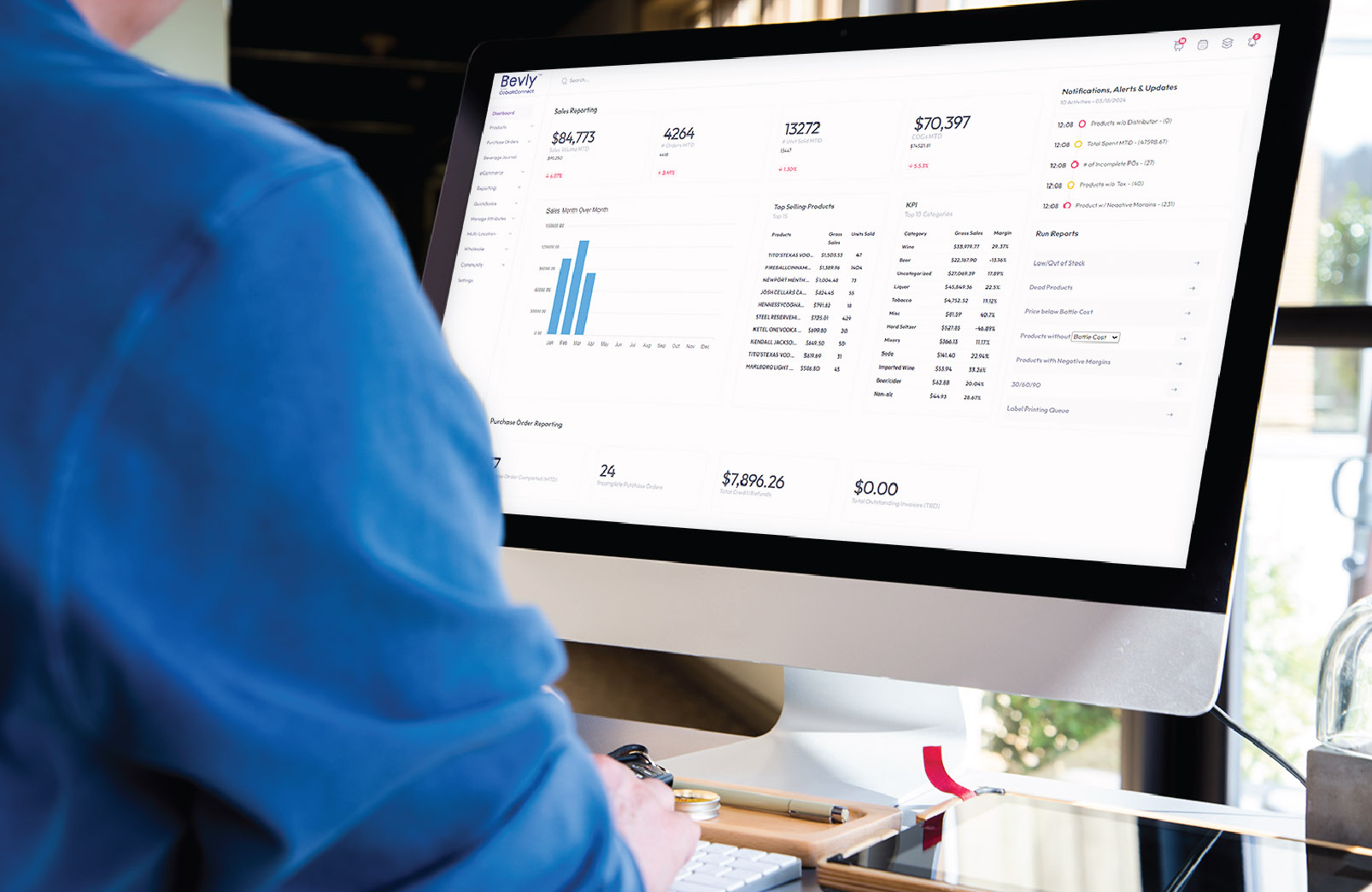
If your goal is to get online without juggling five systems, Bevly helps liquor stores get inventory online, keep it synced, and streamline receiving and product management—so online ordering doesn’t become an additional full-time job for the owner.