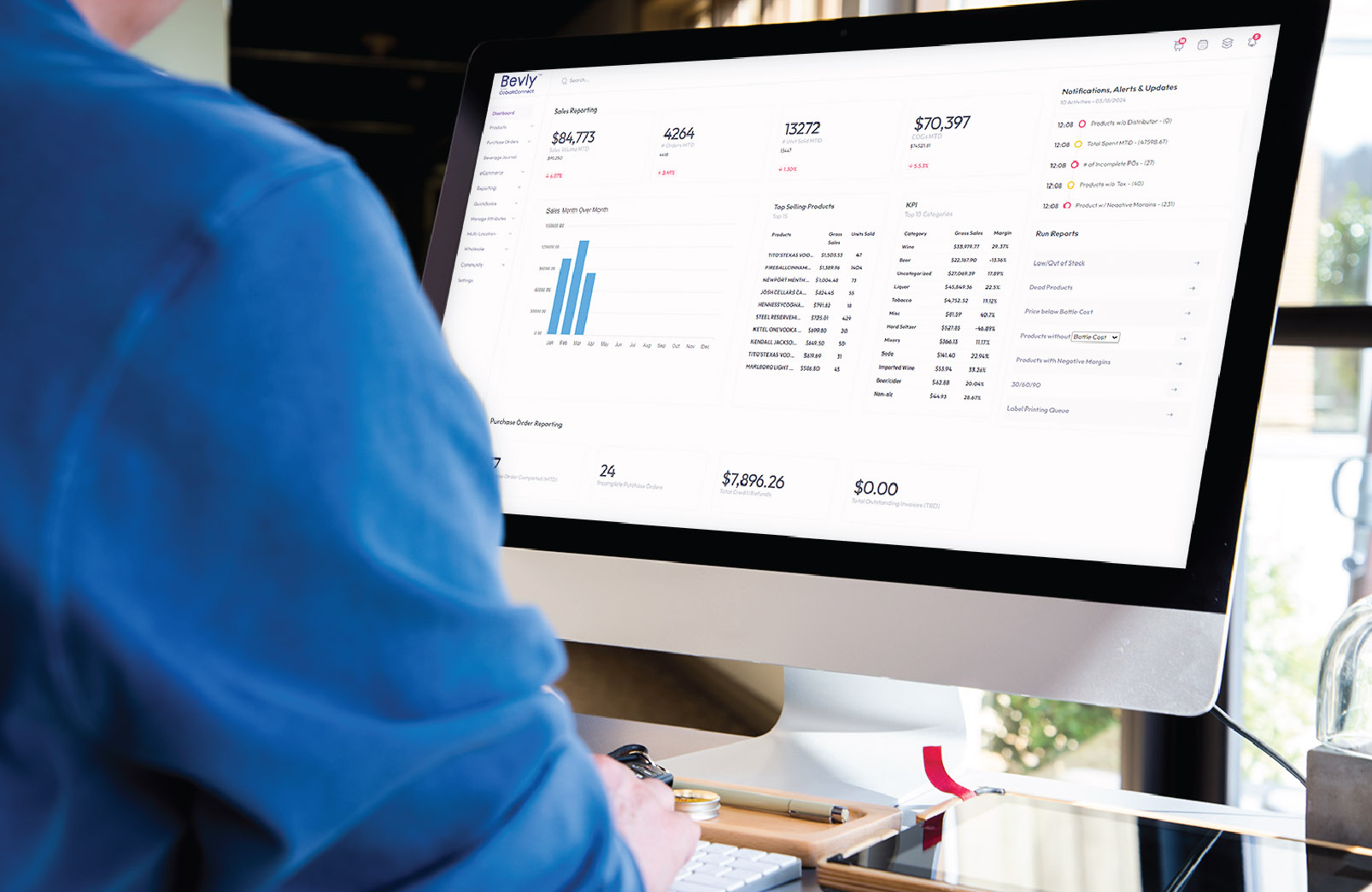
Running a profitable liquor store isn’t just about growing sales — it’s about understanding how your inventory value moves in relation to those sales. Too many store owners look only at top-line revenue and miss the deeper story hidden in their wholesale and retail inventory values.
Being able to compare your wholesale value, retail value, and sales month over month gives you a clear, data-backed view of how efficiently your store is operating, where capital is being tied up, and where profit is leaking out.
Understanding the Three Numbers That Matter Most
To manage your business effectively, you need visibility into three core metrics:
- Wholesale value: What you’ve paid distributors for the inventory currently on your shelves.
- Retail value: What that same inventory is worth at your current shelf prices.
- Sales: What actually sold during a given month.
Individually, each metric is useful. Together, they become a powerful diagnostic tool.
Identify Inventory Bloat Before It Hurts Cash Flow
If your wholesale value is increasing month over month but sales remain flat, it’s a warning sign. It often means:
- You’re over-ordering certain categories or brands
- Slow-moving SKUs are piling up
- Capital is trapped on shelves instead of being reinvested
By comparing wholesale value directly against sales trends, liquor store owners can spot inventory bloat early — before it turns into dead stock or forces heavy discounting.
See If Price Changes Are Actually Improving Margins
Raising prices doesn’t always increase profitability. Without tracking retail value alongside sales, it’s impossible to know if pricing adjustments are working.
Month-over-month retail value comparisons help answer questions like:
- Did higher prices increase total retail value without hurting velocity?
- Did aggressive discounting lower retail value without boosting sales?
- Are certain categories losing margin despite steady unit sales?
This level of visibility lets owners make pricing decisions based on outcomes, not guesswork.
Measure Inventory Efficiency, Not Just Revenue
Two stores can post identical monthly sales — but one might be far more profitable than the other.
Comparing inventory values to sales reveals:
- How much inventory is required to generate a dollar of revenue
- Whether inventory turns are improving or declining
- If new products are helping or hurting efficiency
A store with lower wholesale value and equal sales is operating leaner and freeing up cash for expansion, marketing, or higher-margin products.
Catch Category-Level Problems Early
When tracked monthly, wholesale and retail values can expose category-specific issues long before they show up in overall sales reports.
For example:
- Spirits inventory grows faster than spirits sales
- Wine retail value drops due to excessive markdowns
- Beer sales spike, but wholesale value rises even faster due to poor buying discipline
These insights allow owners to adjust ordering, pricing, and promotions by category instead of reacting after profits decline.
Improve Buying Decisions With Real Data
Month-over-month comparisons turn inventory purchasing into a strategic process.
Instead of asking:
- “What sold the most last month?”
Owners can ask:
- “What generated the best return on inventory investment?”
- “Which products increased retail value without inflating wholesale costs?”
- “Which SKUs tied up cash without driving sales?”
This shifts buying decisions from habit-based ordering to performance-based purchasing.
Build a Healthier, More Predictable Business
Liquor stores that track wholesale value, retail value, and sales together gain a clearer understanding of their business fundamentals:
- Cash flow becomes more predictable
- Overstock and stockouts are reduced
- Margin erosion is caught early
- Growth decisions are based on real performance, not assumptions
Over time, this discipline leads to higher profitability, stronger vendor negotiations, and a more resilient operation — even in volatile market conditions.
Why This Level of Visibility Matters More Than Ever
With rising distributor costs, tighter margins, and changing consumer demand, liquor store owners can’t afford to operate blindly. The ability to compare inventory value and sales month over month transforms raw data into actionable insight.
It’s no longer just about how much you sold — it’s about how efficiently your inventory generated those sales.
For store owners who want tighter control, better margins, and smarter growth, this comparison isn’t a luxury. It’s essential.