🔑 SEO Keywords & Key Phrases: liquor store trends 2025, beer wine spirits retail 2025, alcohol retail trends, beverage retail innovation, liquor store industry statistics, independent liquor store strategies, alcohol industry outlook 2025
The liquor retail landscape is undergoing its most dramatic transformation in decades. From consumer behavior shifts driven by Gen Z’s sober-curious movement, to the explosive rise of ready-to-drink cocktails and relentless demand for e-commerce convenience, liquor store owners who fail to adapt risk being left behind.
Trend 1: Premiumization — Consumers Are Trading Up
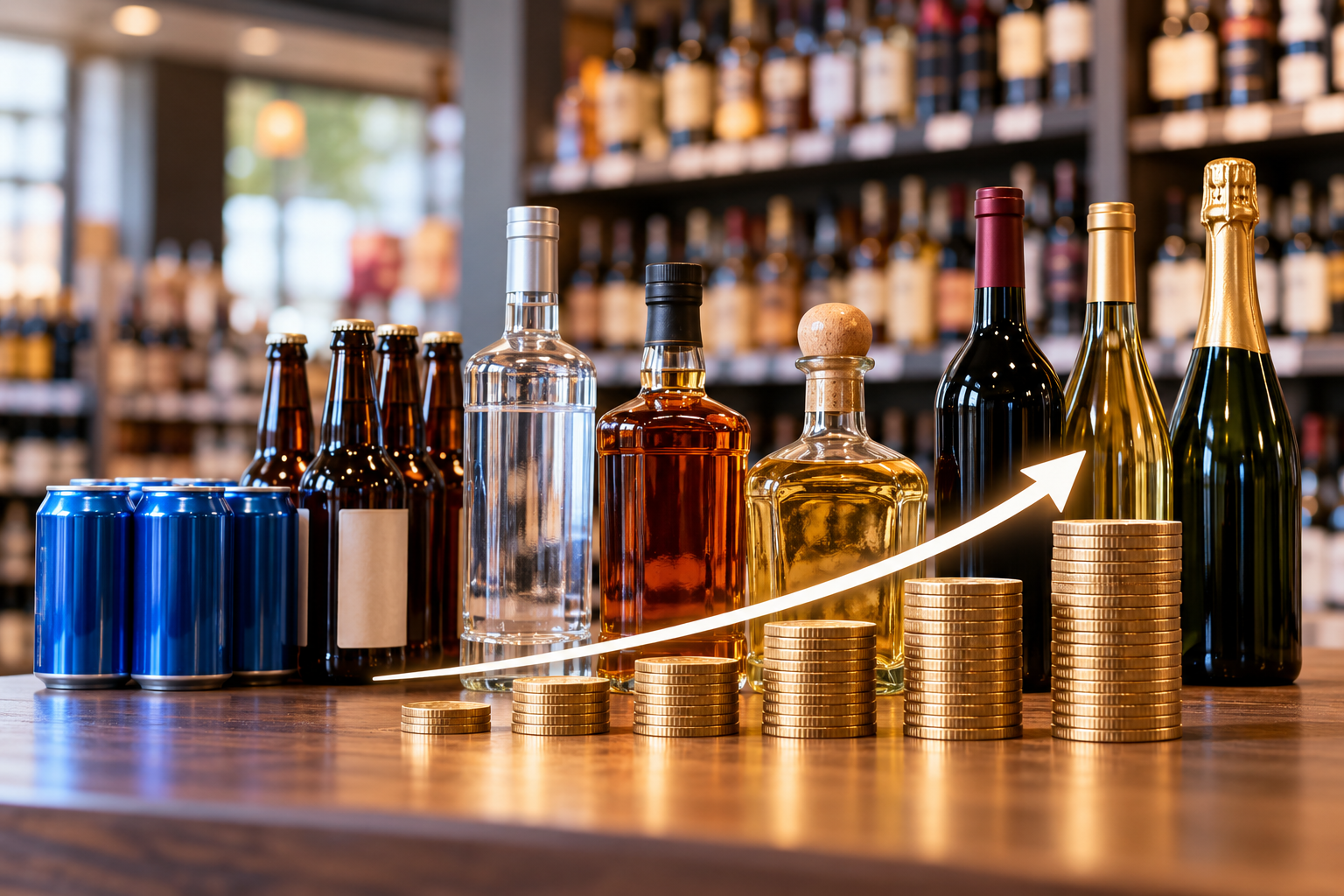
The global premium spirits market was valued at $215.47 billion in 2023, with Grand View Research projecting a CAGR of 9.7% through 2030 — nearly five times the overall retail industry’s growth rate. Super-premium tequila, Japanese whisky, aged rum, and single-malt scotch are leading this charge. Store owners should dedicate premium shelf real estate, train staff in consultative selling, and curate limited-release allocations to satisfy high-margin buyers.
Trend 2: The RTD Revolution
Ready-to-drink cocktails are the single most dynamic category in beverage retail. The U.S. RTD cocktails market — valued at $903.4 million in 2024 — is forecast to grow at a CAGR of 15.3% through 2030, driven by Millennial and Gen Z demand for convenience and quality (Grand View Research). Spirit-based RTDs are growing even faster at a projected 22.6% CAGR. RTDs were the only major alcohol category to record volume growth (+2%) in all of 2023, while beer and wine both contracted (IWSR).
Trend 3: The Sober-Curious Consumer
According to Circana’s 2025 survey, nearly 1-in-2 Americans (49%) are actively trying to drink less — a 44% increase since 2023. Gen Z is leading this charge, with 65% planning to drink less in 2025. Non-alcoholic beer, wine, and spirits sales reached $740 million in the 52 weeks through 2024, up 30.9% year-over-year (IWSR). Critically, 92% of NA buyers also purchase alcohol-containing products — they are moderators, not abstainers.
Trend 4: E-Commerce & Alcohol Delivery Expansion
DoorDash now offers alcohol delivery in 32 states, and platforms like Instacart, Gopuff, and Uber Eats have established themselves as major alcohol retail channels. A Mintel survey found that 54% of U.S. consumers consider convenience a crucial factor when purchasing alcoholic beverages. Stores without an online presence are invisible to an increasingly digitally-first buyer cohort.
Trend 5: Technology-Driven Operations
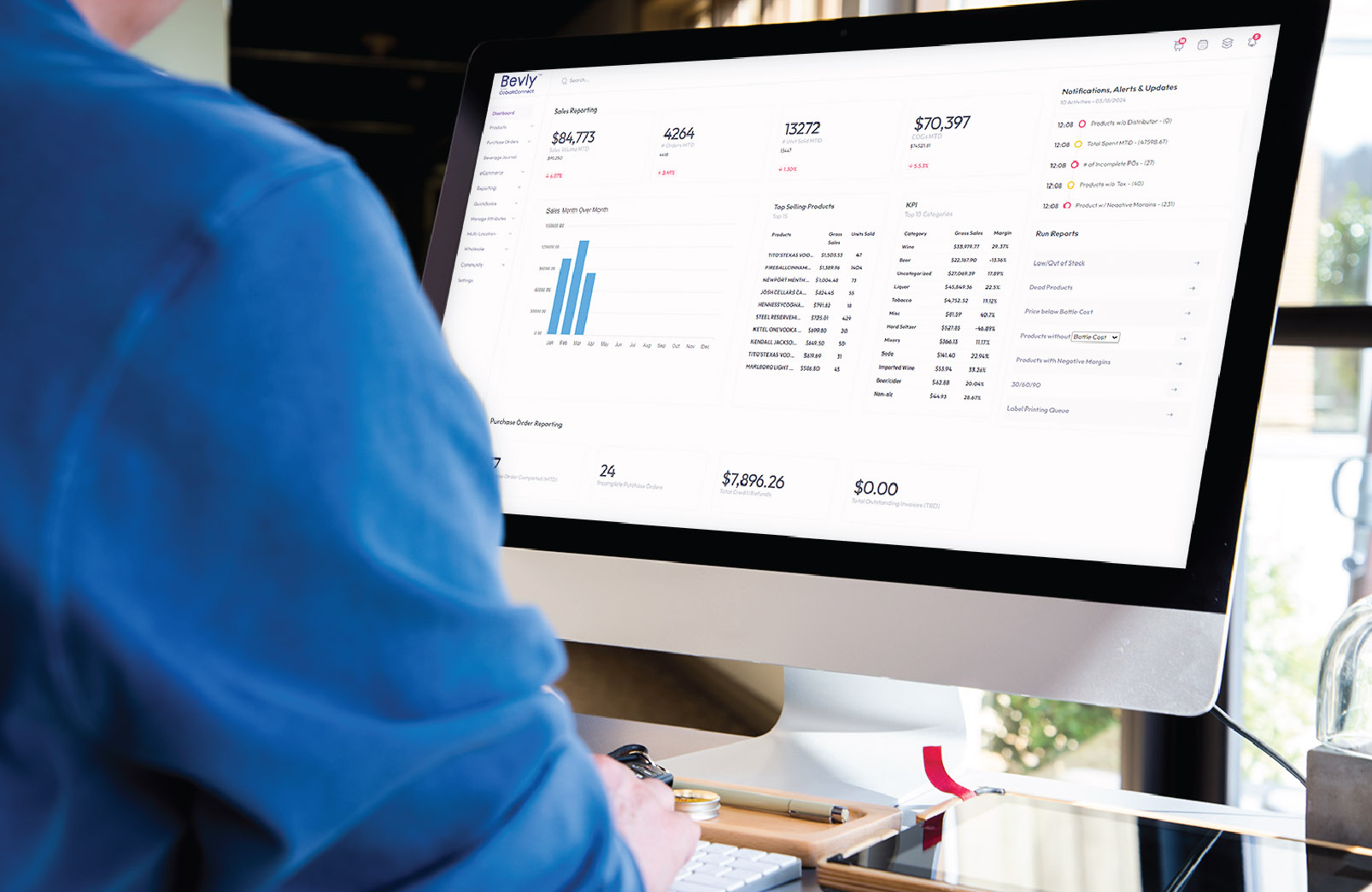
The best-performing liquor stores in 2025 run on data. Modern point-of-sale systems do far more than ring up transactions — they automate purchase orders, track inventory to the bottle, flag low-stock items, manage loyalty programs, and provide real-time analytics dashboards. Stores implementing purpose-built liquor POS systems consistently save 10–20 hours per week on administrative tasks (Technology Advice, 2025).
Trend 6: Local & Craft Movement
Consumers spent more than $1 trillion supporting local businesses in 2024, and 82% of shoppers believe local stores offer better customer service than national chains (LendingTree, 2024). Independent liquor stores are uniquely positioned to champion local craft distilleries and breweries, building exclusive producer relationships that no big-box competitor can replicate.
Trend 7: Sustainability Matters to Shoppers
Trivium Packaging’s Buying Green Report found that 74% of consumers would pay more for products in sustainable packaging. Organic, biodynamic, and low-carbon spirits and wines are capturing shelf space and customer loyalty. Eco-friendly bag-in-box wines use 85% less packaging material than glass and resonate deeply with younger shoppers who prioritize environmental values.
Trend 8: The At-Home Bartender Economy
The global cocktail mixers market, worth $9.1 billion in 2022, is forecast to reach $17 billion by 2030 (Spirits Business). Consumers who built home bars during the pandemic have become increasingly sophisticated home bartenders. Bundled cocktail kits, premium mixer assortments, and recipe cards create upsell opportunities that can increase basket value by 2–3x per visit.
Trend 9: Seasonal & Occasion-Based Shopping
RTD cocktails peak in summer, premium spirits surge in Q4, and non-alcoholic beverages spike every January during Dry January campaigns. Sophisticated retailers use POS analytics to track seasonal buying patterns and optimize inventory accordingly — stocking, promoting, and merchandising with precision rather than intuition.
Trend 10: Customer Data & Loyalty Programs
Research shows that independent liquor stores generate $3–$5 return for every marketing dollar spent when they leverage customer data effectively (SanteHQ, 2025). Loyalty programs that track purchase history enable personalized recommendations, targeted promotions, and tiered access to allocated bottles — deepening customer relationships and meaningfully increasing average transaction value. Increasing customer retention by just 5% can increase profits by 25–95%.
About Bevly
Bevly is the all-in-one liquor store platform built for modern retail — POS, inventory, eCommerce, distributor management, and customer loyalty in one powerful system.
Platform Features
- ✓ Purchase Order Automation
- ✓ 50,000+ Product Database
- ✓ Real-Time Inventory Sync
- ✓ Distributor Network Integration
- ✓ Business Intelligence Dashboards
- ✓ Customer Loyalty & CRM
Contact
Bevly In Action
Bevly transforms your liquor store POS into an intelligent operations hub. With automated purchase order generation, 360-degree supply chain management, access to a 50,000+ product database with professional images and descriptions, and real-time online/in-store inventory sync, Bevly gives independent retailers the infrastructure to compete with regional chains while maintaining the personal touch that wins customer loyalty.
Sources & Citations
[1] IBIS World. Beer, Wine & Liquor Stores in the US Industry Report. 2024.
[2] Grand View Research. Global Premium Spirits Market Report. 2024.
[3] Circana. Sober Curious Nation — Annual Consumer Sentiment Survey. 2025.
[4] Grand View Research. U.S. Ready-to-Drink Cocktails Market Report. 2024.
[5] LendingTree. Shop Local Survey — Consumer Preference Analysis. 2024.
[6] IWSR Drinks Market Analysis. No-Alcohol Global Database. 2024.
[7] Trivium Packaging. Buying Green Report. 2022.
[8] Mintel. U.S. Consumer Purchasing Survey on Beverage Convenience. 2024.
[9] Technology Advice. Best POS System for Liquor Stores in 2025. March 2025.
[10] SanteHQ. How Much Profit Do Liquor Stores Make & How to Earn More. 2025.