Liquor Store Dead Products Are Costing Your Liquor Store Money: How Bevly’s Dead Products Report Can Help
Every liquor store owner knows the feeling: shelves filled with products that seem to collect dust month after month.
While it’s easy to focus on your best-selling items, some of the biggest opportunities to improve profitability are
often hiding in the products that aren’t selling at all.
That’s why Bevly’s Dead Products Report is one of the most valuable inventory management tools available
to liquor retailers.
The report identifies products that have not sold a single unit within a selected time period, helping store owners
uncover hidden inventory issues, free up cash flow, maintain a cleaner inventory database, and make smarter purchasing decisions.
Instantly Identify Products That Aren’t Moving

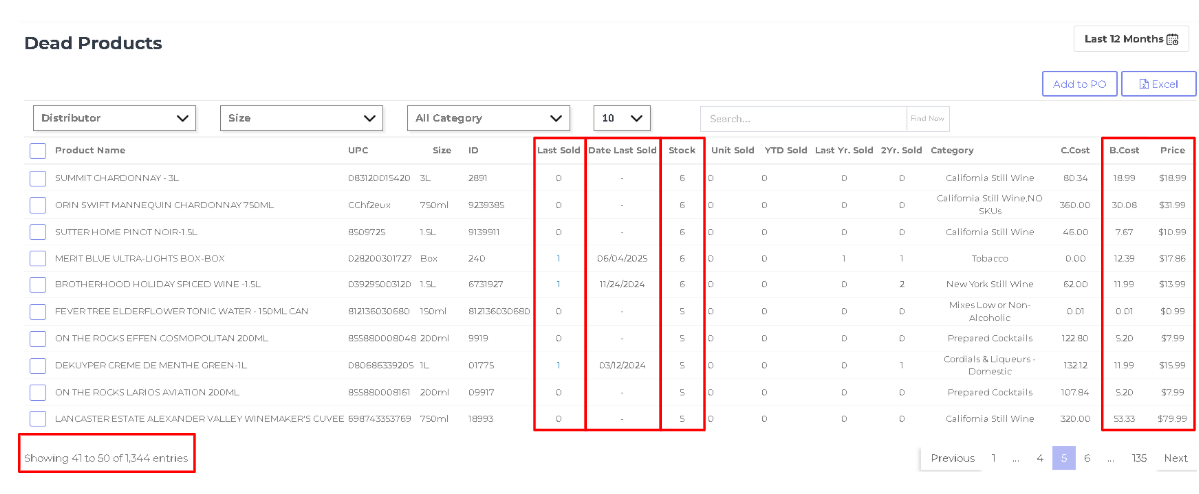
review current stock levels, analyze historical sales activity, and take action directly from the report.
As shown above, the report provides much more than a simple list of inactive products. Store owners can see:
- Product names and UPCs
- Current stock quantities
- Last sold dates
- Units sold over multiple years
- Product categories
- Cost and retail pricing information
This makes it easy to understand whether a product is truly dead inventory, a seasonal item, or simply something
that needs attention.
Turn Dead Inventory Into Cash
Every bottle sitting on a shelf represents money that could be invested elsewhere in your business.
The report highlights products that still have inventory on hand despite recording little or no sales activity.
When these products accumulate, they tie up cash that could be used to purchase faster-moving inventory that
generates better returns.
By reviewing the Dead Products Report regularly, store owners can identify items that may benefit from:
- Clearance pricing
- Temporary promotions
- Bundle offers
- Product repositioning
- Vendor returns when available
Instead of waiting years for a sale that may never come, you can proactively convert stagnant inventory into cash.
Discover Products That May Be Priced Too High
One of the most valuable uses of the report is identifying products that customers consistently pass over.
If a product has been sitting in inventory for 12 months or longer without a sale, pricing may be a contributing factor.
The Dead Products Report allows you to compare:
- Product cost
- Retail price
- Inventory levels
- Historical sales trends
This information helps determine whether a price adjustment could increase demand, improve inventory turnover,
and free up valuable shelf space.
Find Products That No Longer Exist in Your Store
Many liquor store owners are surprised to discover products listed in inventory that haven’t physically existed
in the store for months—or even years.
Inventory inaccuracies can occur due to:
- Theft and shrinkage
- Damaged merchandise
- Vendor returns
- Receiving mistakes
- Physical count discrepancies
When a product appears on the Dead Products Report, it’s worth verifying whether it actually exists in stock.
If the item is no longer present, you can remove it from your inventory database and improve the accuracy of your records.
Simplify Inventory Counts
Over time, inventory databases become cluttered with discontinued products, inactive SKUs, and items that rarely sell.
In many stores, the Dead Products Report can uncover hundreds—or even thousands—of inactive products consuming attention,
reporting space, and inventory management resources.
Cleaning up inactive inventory can:
- Reduce inventory count times
- Improve reporting accuracy
- Simplify ordering decisions
- Make product searches faster
- Improve employee efficiency
Improve Future Purchasing Decisions
Dead inventory tells a story.
When store owners review their liquor store dead products that have failed to sell, they often discover patterns such as:
- Underperforming brands
- Unpopular package sizes
- Slow-moving categories
- Seasonal items that were overpurchased
These insights help improve future buying decisions and reduce the likelihood of creating additional dead inventory.
Edit Product Information to Improve Sales
Sometimes a product isn’t truly “dead”—it’s simply suffering from inaccurate or incomplete product information.
Products with outdated pricing, incorrect categories, missing descriptions, or inaccurate inventory data can easily
be overlooked by both customers and employees.
By identifying these products through the Dead Products Report, retailers can review and update:
- Retail pricing
- Product categories
- Package sizes
- Cost information
- Inventory quantities
- Product descriptions and details
Small adjustments to product information can often improve visibility, increase sales opportunities, and prevent
products from remaining inactive unnecessarily.
Take Action Directly from the Report
One of the most useful features of Bevly’s Dead Products Report is that it doesn’t just provide information—it helps you act on it.
Users can:
- Filter by distributor, size, and category
- Search for specific products
- Export results to Excel
- Add products directly to purchase orders when needed
- Edit product information
- Remove inactive items from inventory
This turns what could be hours of manual analysis into a simple and actionable workflow.
Keep Your Inventory Healthy
Successful liquor stores don’t just focus on what’s selling—they also pay attention to what isn’t.
Bevly’s Dead Products Report helps retailers identify slow-moving inventory, uncover pricing opportunities,
eliminate inventory inaccuracies, improve product data, and free up valuable shelf space.
By regularly reviewing products that haven’t sold in the last 12 months, liquor store owners can improve cash flow,
increase inventory turnover, maintain a cleaner inventory database, and make more informed purchasing decisions.
The result is a more efficient operation, better inventory accuracy, stronger product performance, and a healthier bottom line.