How to Increase Liquor Store Profit Margins
Better Inventory Management, Smarter Pricing and Automation Can Help Liquor Store Owners Increase Liquor Store Profit Margins.
Running a successful liquor store isn’t simply about generating more sales. What ultimately matters is how much of that revenue makes it to the bottom line.
Liquor store owners have to manage distributor costs, payroll, rent, utilities, credit card processing fees, inventory shrinkage and thousands of dollars tied up in products sitting on their shelves. Small inefficiencies can quickly eat into liquor store profit margins.
The good news is that increasing profitability doesn’t always require dramatically increasing sales.
Better inventory management, smarter purchasing decisions, improved pricing and automation can help liquor stores get more profit from the business they’re already doing.
Here are eight areas liquor store owners should examine when trying to increase liquor store profit margins.
1. Know Where Your Profit Is Actually Coming From
Revenue and profit aren’t the same thing.
A product that generates significant sales may not necessarily generate the best return for your store. Owners should understand profitability at the category, brand and individual SKU level.
Look beyond total sales and examine:
- Gross margin
- Inventory turnover
- Cost changes
- Units sold
- Dollars invested in inventory
- Shrinkage
- Discounts and promotions
The goal is to understand which products deserve more of your inventory dollars and which products are consuming cash without producing an adequate return.
Better visibility into store data can make these decisions considerably easier.
2. Reduce the Amount of Money Tied Up in Dead Inventory
One of the biggest threats to liquor store profitability is inventory that doesn’t move.
Every case of wine, bottle of spirits or package of beer sitting in your store represents money that has already left your bank account.
If that product doesn’t sell, you can’t reinvest that cash into products that do.
Liquor stores can accumulate dead inventory because of over-ordering, seasonal purchases, changing consumer preferences, unsuccessful product launches and simply losing track of what is already in stock.
Regularly identify products with poor inventory turnover.
Depending on the product, you may want to reduce future orders, adjust pricing, merchandise it differently or use promotions to move through the remaining inventory.
The objective is simple:
Put more of your inventory dollars into products your customers actually buy.
3. Improve Your Liquor Store Inventory Management
Inventory is one of the largest investments most liquor stores make, which means liquor store inventory management has a direct impact on profitability.
Poor inventory data can lead to over-ordering, stockouts, duplicate purchases and incorrect purchasing decisions.
Consider a simple example.
Your system says you have six bottles of a popular tequila.
You actually have one.
Unless someone catches the discrepancy, you may not reorder until you’ve already lost sales.
The opposite is equally problematic. If your system says you have two cases when you actually have six, someone could order additional inventory unnecessarily.
Accurate inventory gives owners better information for purchasing decisions.
That’s where technology becomes especially valuable.
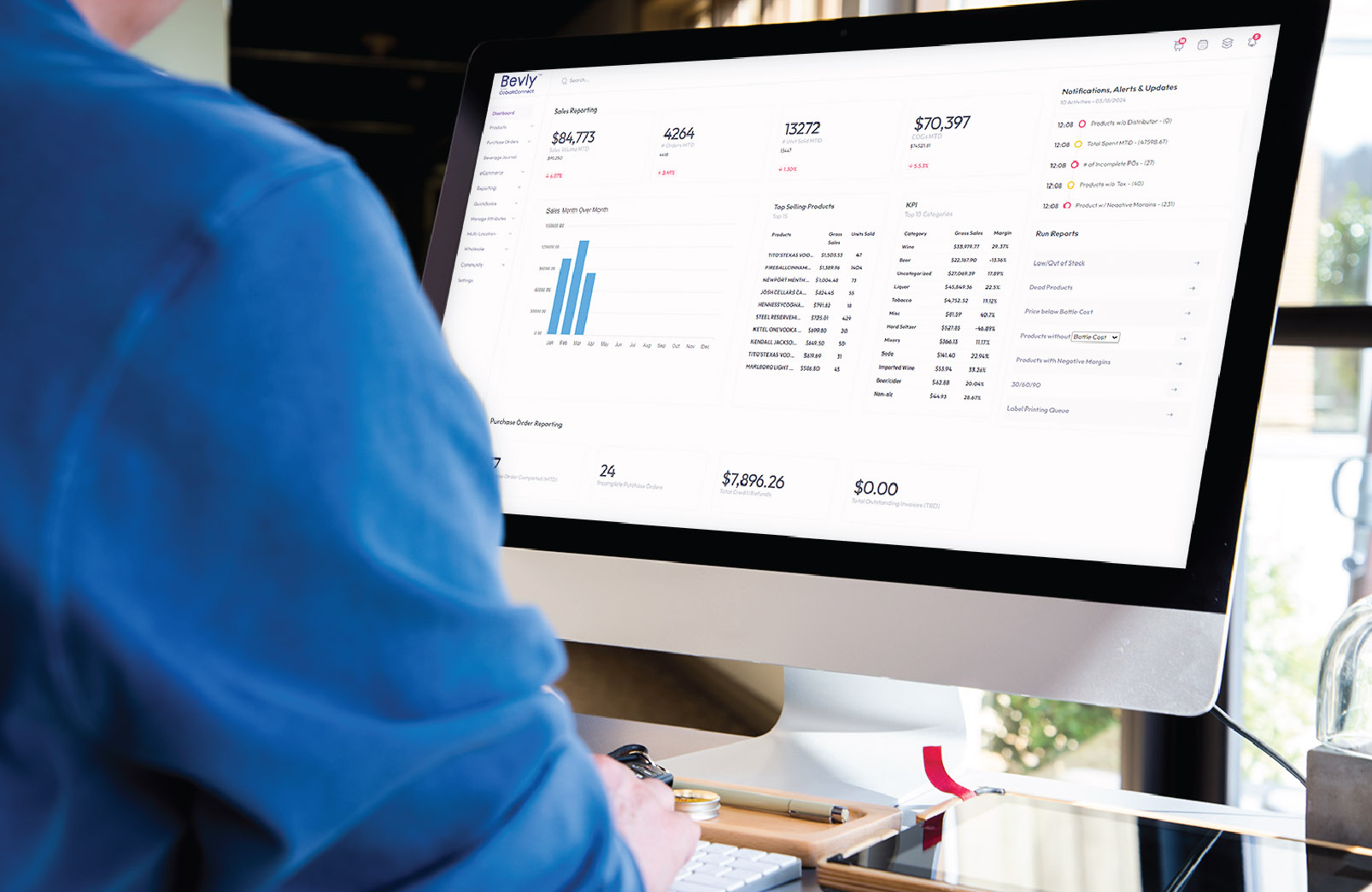
Bevly helps liquor retailers manage inventory, product information and store operations more efficiently.
Schedule a Bevly demo here to see how Bevly could work inside your store.
4. Pay Attention to Distributor Cost Changes
A bottle that was profitable six months ago may not be producing the same margin today.
Distributor costs change.
If your acquisition cost increases but your retail price doesn’t, your margin gets squeezed.
That may only represent a small amount on an individual bottle, but multiply that difference across thousands of transactions and hundreds or thousands of SKUs.
It becomes real money.
Liquor store owners should routinely compare product costs against current retail prices.
When distributor costs increase, determine whether the retail price needs to change to maintain your target margin.
5. Automate Distributor Invoice Processing
Receiving inventory can be one of the most tedious parts of running a liquor store.
A delivery arrives.
Someone has to check the products, review the invoice, update costs, adjust inventory quantities and make sure everything was entered correctly.
When this information is entered manually, the process takes time and creates opportunities for errors.
Those errors can eventually affect purchasing decisions, inventory counts and profitability.
Liquor store inventory automation can dramatically reduce this administrative workload.
For example, Bevly can help retailers process distributor invoice information and update inventory and product data without requiring employees to manually enter every change.
That means less time typing information into a system and more time running the store.
6. Reduce Inventory Shrinkage
You can’t protect your liquor store profit margin if you don’t know where your inventory is going.
Shrinkage can come from several places:
- Theft
- Receiving mistakes
- Damaged products
- Incorrect inventory adjustments
- Products entered under the wrong SKU
- Employee errors
- Unrecorded breakage
Individually, these problems may appear small.
Over an entire year, they can represent thousands of dollars in lost inventory.
Better inventory tracking makes discrepancies easier to identify and investigate.
Instead of discovering a major problem during an annual inventory count, owners can identify unusual discrepancies much earlier.
7. Prevent Stockouts of Your Best-Selling Products
Dead inventory hurts profitability.
But so does the opposite problem.
Running out of products customers regularly purchase creates lost sales.
A customer who walks into your store looking for their usual bottle of bourbon, case of beer or bottle of wine may purchase an alternative.
Or they may simply go somewhere else.
Your fastest-moving products deserve particular attention.
Monitor inventory levels and sales velocity so you can reorder popular products before they disappear from the shelf.
At the same time, avoid treating every SKU equally.
A product selling several cases per week requires a very different replenishment strategy from a bottle that sells once every three months.
8. Use Technology to Reduce Administrative Work
Labor is expensive, including the owner’s time.
Consider how many hours your business spends each month on:
- Entering invoices
- Updating product costs
- Adjusting inventory
- Checking stock levels
- Researching products
- Correcting inventory mistakes
- Reviewing pricing
- Managing product information
Now put a dollar value on those hours.
Manual processes aren’t free simply because you aren’t writing a separate check for them.
If technology can turn a 45-minute administrative process into a task that takes only a few minutes, the savings compound every week.
That’s why modern liquor store inventory software shouldn’t just record transactions. It should help eliminate unnecessary work.
Small Margin Improvements Can Produce Big Results
You don’t necessarily need a dramatic change to make a meaningful difference in profitability.
Imagine a liquor store generating $1.5 million in annual sales.
A one-percentage-point improvement in profitability represents:
$15,000 per year.
A two-point improvement represents:
$30,000 per year.
That’s why small operational improvements matter.
Reducing dead stock, responding faster to distributor cost changes, preventing stockouts, improving inventory accuracy and reducing administrative labor can collectively have a significant effect on the bottom line.
Make Your Liquor Store More Profitable With Better Data
The liquor retail business will always involve inventory.
The question is how efficiently you manage it.
Store owners who understand what’s selling, what isn’t selling, what their products cost and what’s actually sitting on their shelves can make better decisions about where to invest their money.
Technology can make that information easier to manage.
Bevly gives liquor retailers tools designed specifically for the operational realities of the beverage alcohol industry, helping stores improve inventory management and reduce time-consuming manual processes.
Want to see what that could look like in your store?
Schedule a Bevly demo and see how Bevly can help you run a more efficient, profitable liquor store.