What Is a Good Profit Margin for a Liquor Store? A Category-by-Category Guide
Running a profitable liquor store isn’t simply about increasing sales. What you sell—and how much profit you make when you sell it—can be just as important as total revenue.
A store doing $2 million in annual sales with poorly managed margins can generate less profit than a smaller store with better purchasing, pricing, inventory turnover, and product mix.
That raises an important question:
What is a good profit margin for a liquor store?
There isn’t one percentage that every product should hit. Liquor stores carry thousands of SKUs across categories with very different competitive pressures, price points, turnover rates, and consumer expectations.
A better strategy is to establish margin targets by category and then identify products that fall outside those targets.
First: Understand Gross Profit Margin
Before setting targets, liquor store owners need to distinguish gross margin from markup.
If you purchase a bottle for $20 and sell it for $25, you’ve marked the product up 25%.
But your gross profit margin is only 20%.
The formula is:
Gross Margin = (Retail Price – Product Cost) ÷ Retail Price × 100
For example:
- Cost: $20
- Retail Price: $25
- Gross Profit: $5
- Gross Margin: 20%
That distinction matters. If you’re trying to achieve a 30% gross margin, simply adding 30% to your cost won’t get you there.
Now let’s look at reasonable starting targets for different liquor store categories. These aren’t universal rules: local competition, state pricing regulations, distributor costs, store format, volume, and market positioning can all materially change the appropriate margin.
Domestic Beer: Approximately 20–25%
Domestic beer is frequently one of the most price-sensitive categories in a liquor store.
Customers often know what a 12-pack or 30-pack of their favorite beer costs, and it’s relatively easy for them to compare your price with supermarkets, warehouse clubs, convenience stores, and competing package stores.
That makes aggressive margins difficult on major national brands.
A practical target range might be:
20–25% gross margin
High-volume packages may justify thinner margins when they generate significant traffic and inventory turnover.
The mistake is assuming every beer SKU needs to carry the same margin. Craft, specialty, seasonal, imported, and limited-distribution products can have very different pricing dynamics.
Craft and Specialty Beer: Approximately 25–35%
Craft beer can often support higher margins than mainstream domestic beer because consumers aren’t necessarily comparing prices as closely across every retailer.
Specialty releases, local breweries, seasonal offerings, variety packs, and less widely distributed products can provide additional pricing flexibility.
A potential target range is:
25–35% gross margin
But there is an important tradeoff: margin doesn’t matter if the product doesn’t sell.
A craft four-pack with a 35% theoretical margin isn’t helping your business if it sits on the shelf for eight months.
Retailers should evaluate margin alongside inventory turnover.
Mainstream Spirits: Approximately 25–30%
Popular vodka, whiskey, tequila, rum, and gin brands frequently fall into a competitive middle ground.
Consumers recognize the brands and often have a general sense of what they should cost, but stores may still have more pricing flexibility than they do with highly visible beer packages.
A reasonable starting target might be:
25–30% gross margin
The exact target can vary substantially by bottle size and brand.
For example, a 1.75L bottle of a major national vodka brand may be extremely price-sensitive, while a less familiar 750ml premium spirit could support a higher margin.
Premium and Specialty Spirits: Approximately 30–40%
Premium spirits can present an opportunity for stronger margins.
Customers shopping for higher-end bourbon, tequila, Scotch, Cognac, or specialty liqueurs may be more focused on availability, selection, recommendations, and convenience than finding the absolute lowest price.
A potential target range might be:
30–40% gross margin
However, retailers should be careful with expensive inventory.
A $150 bottle sitting on the shelf for two years represents capital that could have been invested in products turning several times per year.
The goal shouldn’t simply be maximizing margin percentage. It should be maximizing the productive use of your inventory dollars and shelf space.
Allocated and Highly Sought-After Spirits: Case-by-Case
Allocated bourbon and other scarce products are difficult to place into a standard margin range.
Some retailers use allocated products as customer-loyalty tools and keep prices relatively close to suggested retail prices. Others price scarce products according to local market conditions.
For these products, retailers need to consider more than margin:
- Acquisition cost
- Replacement availability
- Customer relationships
- Competitive pricing
- Local laws and regulations
- Store positioning
A single blanket margin target is unlikely to make sense across the entire allocated category.
Value and Mainstream Wine: Approximately 25–35%
Wine presents an interesting pricing opportunity because direct price comparisons can become more difficult as a store’s assortment becomes broader.
Widely distributed brands are generally more price-sensitive because shoppers can easily compare them across retailers.
A potential starting target for mainstream wine is:
25–35% gross margin
Stores with aggressive wine programs may accept lower margins on recognizable traffic-driving brands while generating stronger margins elsewhere in the category.
Premium, Boutique, and Specialty Wine: Approximately 30–40%
Boutique wines and less widely distributed labels may offer greater margin opportunities.
When shoppers don’t have an immediate reference price, the retailer’s merchandising, staff recommendations, selection, and product knowledge become more valuable.
Potential target:
30–40% gross margin
Strong wine retailers frequently think in terms of the entire category rather than attempting to achieve the same margin on every bottle.
Ready-to-Drink Cocktails and Hard Seltzers: Approximately 25–35%
RTDs have become an important part of many liquor stores’ product mix.
Margins can vary significantly depending on the brand, package size, promotional activity, and level of local competition.
A reasonable starting range might be:
25–35% gross margin
Retailers should pay particular attention to seasonal demand. An RTD that sells rapidly during spring and summer can turn into slow-moving inventory once colder weather arrives.
Mixers, Soda, Juice, and Non-Alcoholic Add-Ons: Approximately 30–40%+
Some of the strongest percentage margins in a liquor store may come from products that don’t contain alcohol.
Mixers, cocktail ingredients, soda, juice, ice, snacks, gift bags, corkscrews, and other convenience items can potentially support higher margins.
Depending on the product and local market, retailers may target:
30–40% or higher
These products also provide an important opportunity to increase the total profit generated by each transaction.
A customer buying tequila may also need margarita mix, lime juice, salt, and ice.
Increasing basket size can be just as valuable as raising the margin on the original bottle.
Don’t Manage Your Store Around One Margin Number
One of the biggest pricing mistakes a liquor store can make is applying the same margin target to every product.
Consider two hypothetical products.
Product A
- Cost: $20
- Retail: $24.99
- Gross Margin: approximately 20%
Product B
- Cost: $20
- Retail: $30.99
- Gross Margin: approximately 35%
At first glance, Product B looks substantially better.
But suppose Product A sells 30 units per month while Product B sells one.
Product A generates approximately $150 in monthly gross profit, while Product B generates only about $11.
That’s why retailers should evaluate several metrics together:
Margin + Unit Sales + Inventory Turnover + Gross Profit Dollars
A lower-margin product that sells constantly can be extremely valuable.
A high-margin product collecting dust isn’t.
The Hidden Problem: Your Costs Keep Changing
Setting your margins once isn’t enough.
Distributor pricing changes. Deals expire. Quantity discounts change. Freight or fees can affect costs. Suppliers implement price increases.
If your cost increases but your retail price stays the same, your margin quietly declines.
Imagine a bottle that costs $18 and retails for $25.99.
Your gross margin is roughly 30.7%.
If the distributor increases your cost to $20 and your retail price remains $25.99, your margin falls to roughly 23.0%.
Nothing changed at the register.
Customers are still paying $25.99.
But you’re now making almost $2 less gross profit every time you sell that bottle.
Multiply that across hundreds or thousands of SKUs and margin leakage can become a significant problem.
Why Liquor Stores Need Profit Margin Alerts
A liquor store owner shouldn’t have to manually review thousands of products every time distributor costs change.
This is where modern liquor store management software can make a substantial difference.
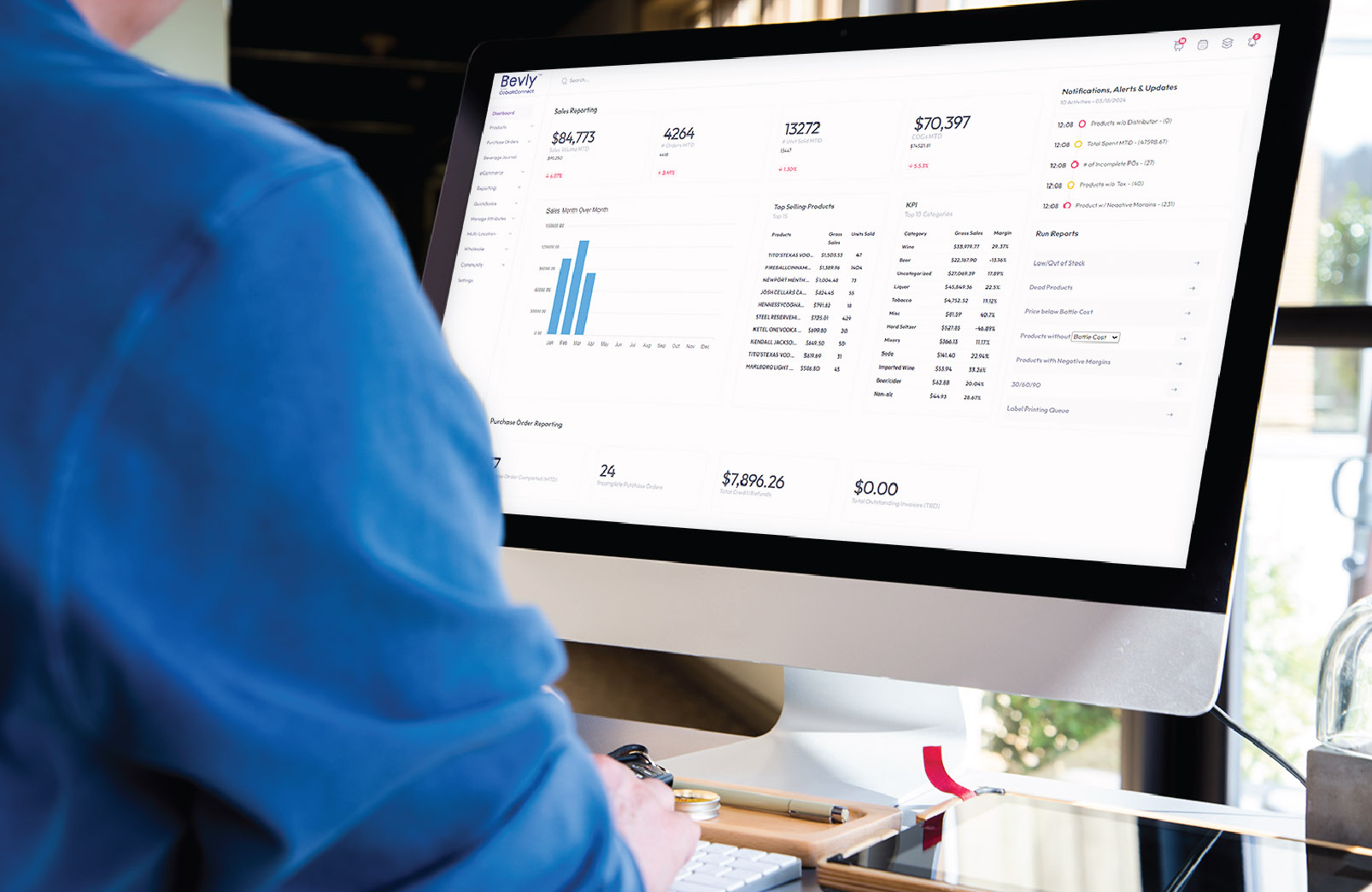
Bevly provides Profit Margin Alerts designed to help retailers identify products that fall below their desired margin levels.
Instead of discovering months later that a product has been selling at an unexpectedly low margin, retailers can identify pricing problems and decide whether an adjustment makes sense.
That doesn’t mean automatically raising every price.
It means having the information necessary to make the decision.
For a highly competitive product, you may intentionally accept a lower margin.
For another product, there may be no reason to leave money on the table.
The important thing is knowing the difference.
Your Most Important Margin Report May Be the Exception Report
Owners don’t necessarily need another massive spreadsheet showing every SKU in their store.
They need to know:
Which products require attention?
- Which products are below my target margin?
- Which products experienced a significant cost increase?
- Which high-volume products have unusually low margins?
- Which categories are underperforming their margin targets?
- Which products haven’t sold in months?
- Which products have enough pricing flexibility to improve profitability?
Those exceptions are where management attention can produce results.
Margin and Inventory Turnover Must Work Together
Ultimately, the objective isn’t to achieve the highest possible margin percentage.
The objective is to generate more gross profit from the capital invested in inventory.
Consider a retailer with $500,000 invested in inventory.
Some products might sell every week.
Others might sell every few months.
And some products might not have sold a single unit in the last year.
Those products represent capital that isn’t working for the business.
This is why pricing, margins, inventory turnover, purchasing, and dead-stock management shouldn’t be treated as separate problems. They’re different components of the same retail profitability strategy.
A Better Liquor Store Margin Strategy
Instead of asking, “What margin should I make on everything?”, consider asking:
“What margin should this category generate, how quickly should this inventory turn, and how many gross-profit dollars is this shelf space producing?”
That leads to better pricing decisions.
A store might intentionally operate with lower margins on recognizable traffic-driving beer and spirits while generating stronger margins on premium wine, specialty spirits, craft products, mixers, and convenience items.
The ideal product mix balances competitive pricing, gross margin, inventory turnover, and gross-profit dollars.
And once a store carries thousands of products, managing those variables manually becomes increasingly difficult.
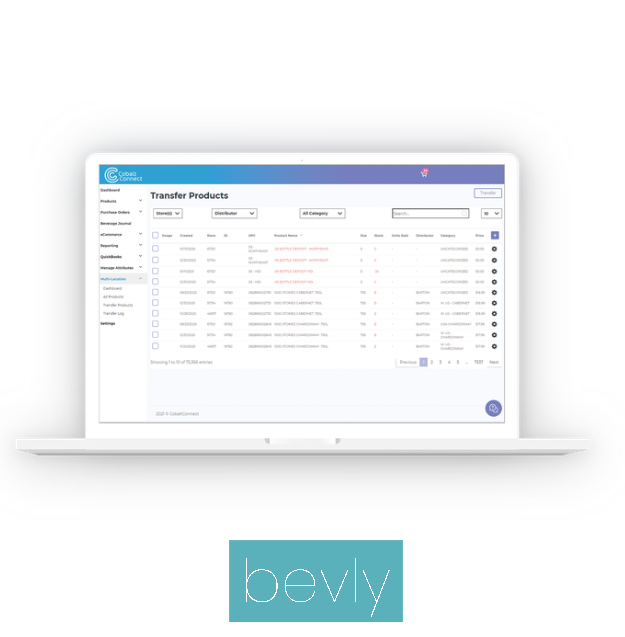
Software like Bevly can help retailers monitor inventory, identify dead products, track margins, automate receiving, and surface products that require attention—giving owners better information for pricing and purchasing decisions.
Because improving liquor store profitability doesn’t always require selling more.
Sometimes it starts with understanding what you’re already selling, what you’re making when you sell it, and which products are tying up your money.
“`