Managing Liquor Store Inventory with Excel vs. Specialized Inventory Software: What’s Best for Your Liquor Store?
For many liquor store owners, inventory management starts with a familiar tool: Microsoft Excel. It’s affordable, flexible, and available on almost every computer. But as stores grow, product catalogs expand, and margins become tighter, many operators discover that spreadsheets create more problems than they solve.
The question becomes: Is Excel enough, or is it time for a specialized inventory management platform like Bevly?
Let’s compare the two approaches.
Managing Inventory with Excel
Excel has long been the default solution for tracking inventory. Store owners can build spreadsheets to record product counts, costs, sales, and supplier information.
At first glance, this seems like a practical option. Excel offers:
- Low upfront cost
- Familiar interface
- Customizable spreadsheets
- Basic reporting capabilities
For very small operations with limited SKUs, Excel can be an effective starting point.
However, liquor inventory presents unique challenges that spreadsheets weren’t designed to handle.
The Challenges of Using Excel
1. Manual Data Entry
Every inventory update requires someone to enter data manually. Receiving deliveries, conducting counts, updating costs, and recording adjustments all depend on human input.
This creates opportunities for typing errors, duplicate entries, missing information, and outdated inventory records.
Even small inaccuracies can compound over time, leading to costly discrepancies.
2. Limited Real-Time Visibility
Excel only reflects the information that was entered most recently. If a product sells throughout the day, receives a delivery, or gets transferred between locations, the spreadsheet won’t automatically update.
3. Difficult Reporting
Liquor stores often need answers to questions like which products are overstocked, which SKUs are moving fastest, what inventory is approaching reorder levels, and how much capital is tied up in inventory.
While Excel can generate reports, creating and maintaining them often requires advanced formulas, pivot tables, and significant manual effort.
4. Scaling Becomes Difficult
As inventory grows from hundreds to thousands of SKUs, spreadsheets become increasingly difficult to maintain. Version control issues emerge, information becomes fragmented, and management loses confidence in the data.
Managing Liquor Store Inventory with Bevly
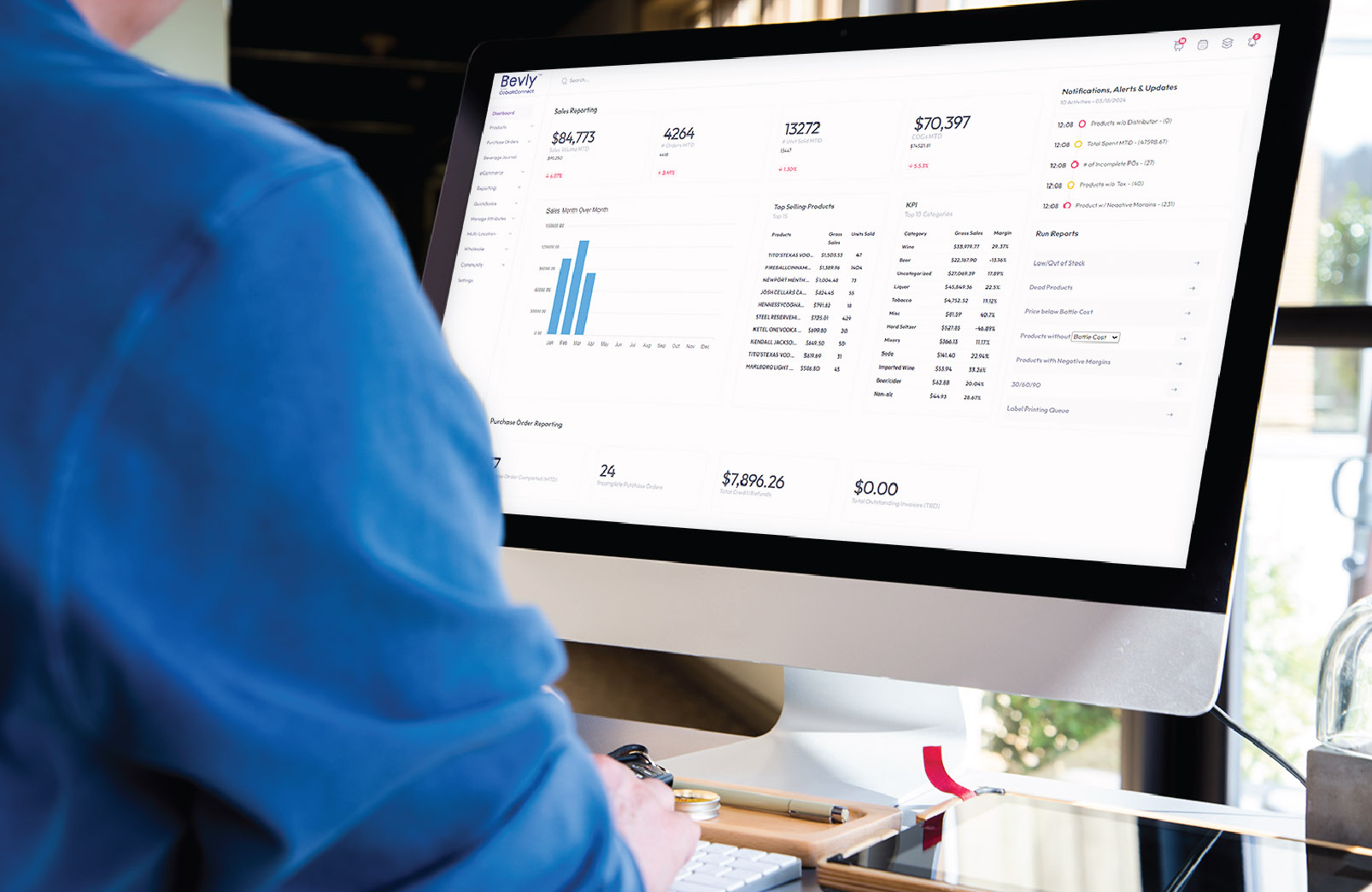
Bevly was built specifically for beverage alcohol retailers and distributors. Instead of forcing liquor stores to adapt generic spreadsheet tools, Bevly provides workflows designed around how alcohol inventory is actually managed.
1. Real-Time Inventory Tracking
Every inventory movement is automatically captured and reflected throughout the system. Store owners can instantly see current stock levels, product movement, inventory valuation, and reorder needs.
2. Reduced Human Error
Managing liquor store inventory by automating inventory updates and standardizing processes, Bevly significantly reduces the manual work that leads to mistakes. The result is greater inventory accuracy and fewer costly surprises during physical counts.
3. Automated Reporting and Insights
Instead of building reports from scratch, Bevly provides actionable insights out of the box. Store owners can quickly identify fast-moving products, slow-moving inventory, dead stock, inventory turnover trends, and reorder opportunities.
4. Better Purchasing Decisions
Inventory management isn’t just about counting products — it’s about optimizing investment. Bevly helps retailers understand what to reorder, when to reorder, how much to order, and which products are tying up cash unnecessarily.
5. Built for Multi-Location Growth
As businesses expand, inventory complexity increases dramatically. Bevly provides a centralized system for managing inventory across multiple locations, making it easier to monitor performance, standardize operations, and maintain visibility across the organization.
The True Cost Comparison
Many store owners assume Excel is free while specialized software is expensive. But the real cost of inventory management includes employee time, inventory discrepancies, stockouts, excess inventory, lost sales opportunities, and purchasing mistakes.
When these hidden costs are considered, a dedicated inventory platform often delivers significant return on investment.
Which Solution Is Right for Your Store?
Excel can be a reasonable solution for very small stores with limited inventory and simple operations. However, as product counts increase and inventory becomes a larger financial investment, spreadsheets often become a bottleneck.
Specialized software like Bevly helps liquor retailers move beyond manual tracking and gain real-time visibility into their inventory, purchasing decisions, and business performance.
The goal isn’t just better inventory management — it’s building a more profitable, efficient, and scalable liquor business.
If your team spends more time maintaining spreadsheets than managing inventory, it may be time to consider a solution designed specifically for the beverage alcohol industry.